

Understanding Corns: Types, Causes, and How a Podiatrist Can Help
By Chamith Abeyratne
A small patch of hard skin can cause a surprising amount of pain. Corns often start as a minor nuisance, then become sharp, burning, or bruised under pressure. Many people try padding, trimming, filing, or pharmacy treatments before realising the problem keeps coming back because the cause is still there.
Corns are common, but they are often misunderstood. A corn is not just “dry skin”. It is the skin’s response to repeated pressure or friction, usually over a small, focused area of the foot or toe.
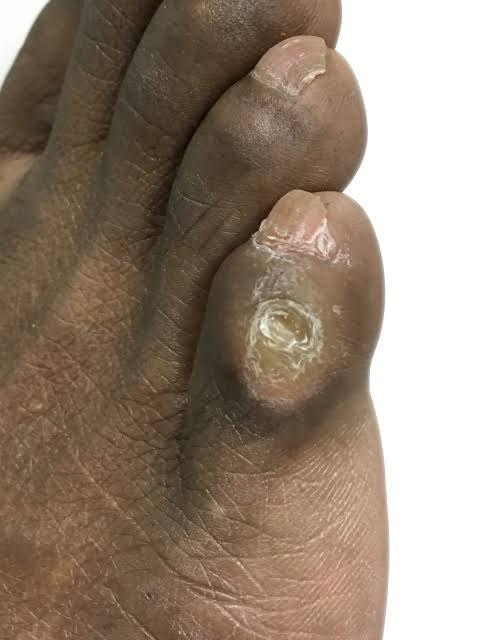
What corns are and why they form
Corns are localised areas of thickened skin. The medical term often used is heloma. They form when the outer layer of skin, the stratum corneum, thickens to protect the tissues underneath.
That protective response is useful at first. The problem begins when pressure continues. The thickened skin becomes more compact. A central plug or core can develop and press down into the deeper skin layers. That is why a small corn can feel like walking on a stone.
Corns usually appear on:
The tops of toes
The tips of toes
Between toes
The ball of the foot
The side of the little toe
Around nail edges
Areas affected by bunions, hammertoes, or prominent bones
A Corn is different from a callus. A callus tends to be broader and more spread out. A corn is usually smaller, deeper, and more painful with direct pressure.
One simple way to think of it is this:
Callus
Corn
A wider patch of thickened skin caused by general pressure or rubbing
A compact, focused plug of hard skin caused by concentrated pressure

Corns are not contagious. They are not caused by a virus. This is one key difference between corns and plantar warts, which can sometimes look similar to the untrained eye.
The main types of corns
Not all corns behave the same way. The type of corn gives clues about the cause, the best treatment, and how likely it is to return.
Hard corns
Hard corns are the type most people recognise. They are firm, round, and often have a dense central core. They usually form on dry areas of skin where bone sits close to the surface.
Common places include:
The top of a bent toe
The outside of the little toe
The ball of the foot
The tip of a toe that is taking too much pressure
Hard corns are often linked to footwear pressure, toe deformity, or changes in walking pattern. A shoe that fits poorly can rub the same spot with every step. Over time, the skin responds by thickening.
A hard corn on the ball of the foot may feel like a tiny pebble under the skin. It can become worse in thin-soled shoes, high heels, work boots, or shoes with narrow toe boxes.
Soft corns
Soft corns form between the toes, most often between the fourth and fifth toes. They look white, rubbery, or macerated because moisture gets trapped in the web space.
They can be very tender. Sometimes they split, sting, or become inflamed. The pressure usually comes from two toe bones pressing against each other, often made worse by tight shoes.
Soft corns need careful management because the skin between the toes is delicate. If the area breaks down, infection can follow, especially in people with diabetes or reduced immunity.
Seed corns
Seed corns are small, dry, and often appear in clusters on the sole. They can look like tiny plugs of hard skin. Some are painless, while others feel sharp when walking barefoot or on hard floors.
They are often associated with dry skin and areas of repeated friction. Unlike a deep hard corn under a weight-bearing bone, seed corns may be more superficial, but they can still be irritating.
People sometimes mistake seed corns for warts. A podiatrist can assess the skin markings, tenderness pattern, and surface appearance to help tell the difference.
Neurovascular corns
Neurovascular corns are more complex. They contain tiny blood vessels and nerve endings within the corn tissue. They can be extremely sensitive, even before treatment. They can be common in people that smoke.
These corns often develop after long-standing pressure. They may bleed slightly when reduced. Because they are more painful and reactive, they should be treated by a professional rather than dug out at home.
Fibrous corns
A fibrous corn is usually long-standing and has become dense, tough, and scar-like. It may not reduce as easily as a newer corn. These often occur in areas where pressure has been present for years. They can be common in people that smoke.
Fibrous corns can need a longer-term plan. Simple removal may give short-term relief, but recurrence is common unless the pressure source changes.
Corns around or under the nail
Corns can form along the nail groove, beside the nail, or under the nail plate. These may be linked to nail shape, toe pressure, footwear, or bony changes at the end of the toe.
They can feel like an ingrown toenail, especially when the corn sits in the side groove. Accurate diagnosis matters because the treatment for a nail corn is different from the treatment for a true ingrown nail.
What causes corns to keep coming back
Corns return when pressure returns. That is the key point. Removing the hard skin can be very effective for pain relief, but the skin will build up again if the foot is still receiving the same mechanical stress.
Common causes include:
Shoes that are too tight, too loose, too shallow, or too narrow
High heels that push weight onto the ball of the foot
Toe deformities such as hammertoes or claw toes
Bunions or prominent joints
A long or plantar-flexed metatarsal bone
Loss of fatty padding under the forefoot
Occupational pressure from standing or walking for long hours
Sporting load, especially running, court sports, and hiking
Abnormal walking patterns
Dry skin that cracks and thickens more readily
Footwear is often part of the story, but it is not always the whole story. We often see people who have already changed shoes, yet the corn remains. In those cases, we look deeper at foot shape, joint movement, toe position, skin condition, and how force moves through the foot.
Skin health also matters. Dry, less elastic skin is more likely to thicken and fissure. Excess moisture between the toes can contribute to soft corns and fungal issues. A podiatry dermatology approach looks at both pressure and skin condition.
When a corn needs professional attention
Many mild corns settle when pressure is reduced early. Wider shoes, padding, moisturising, and avoiding direct rubbing may help. But there are times when self-care is not enough, or when it may be unsafe.
See a podiatrist if:
The corn is painful when walking
The skin is red, swollen, cracked, bleeding, or weeping
You are not sure whether it is a corn, wart, splinter, or another skin lesion
The corn keeps coming back after home care
You have diabetes, poor circulation, or reduced feeling in your feet
You have had previous foot ulcers
The corn sits between the toes and the skin is breaking down
Pharmacy acid treatments have irritated the skin
Pain is changing the way you walk
A painful corn can make a person shift weight away from the sore spot. That can lead to pain elsewhere, such as the ankle, knee, hip, or lower back. Small foot problems can change movement patterns more than people expect.
Be careful with medicated corn pads and acid plasters. They can damage healthy skin around the corn, especially if the pad slips. This is particularly risky for people with diabetes, fragile skin, reduced circulation, or reduced sensation.
Avoid cutting corns at home with blades, scissors, nail clippers, or razors. It is easy to cut too deep or introduce infection. Bathroom surgery often makes a small problem much worse.
How a podiatrist can help
A podiatrist does more than remove hard skin. Good corn treatment has two aims: relieve pain now and reduce the reason it formed in the first place.
Assessment of the skin and pressure pattern
The appointment usually starts with a history and examination. A podiatrist looks at the skin lesion, its location, the surrounding callus, the toes, nails, footwear, and weight-bearing pattern.
The goal is to answer several questions:
Is it definitely a corn?
What type of corn is it?
What pressure is causing it?
Is there infection, ulcer risk, or another skin condition?
What needs to change to reduce recurrence?
Sometimes the diagnosis is straightforward. Other times, corns can mimic warts, foreign bodies, porokeratosis, nail problems, or other dermatological lesions. If something looks unusual, changes quickly, bleeds without reason, or does not behave like a typical corn, further medical review may be needed.
Safe removal of the corn
Podiatrists commonly reduce corns using sterile instruments. This is called debridement or enucleation, depending on the technique and type of lesion. The aim is to remove the compacted hard skin while protecting healthy tissue.

Most people feel immediate relief, especially when the corn has been pressing deeply. The treatment should not feel like someone simply “digging a hole”. Skilled reduction is controlled, precise, and guided by the skin’s structure.
For soft corns, treatment may include gentle reduction, drying strategies, toe spacers, and advice to reduce pressure between the toes.
For nail groove corns, the podiatrist may manage the corn and also assess nail shape, nail thickness, footwear pressure, and toe alignment.

Padding and offloading
Offloading means reducing force on the sore area. This can be done in several ways.
A podiatrist may use:
Felt padding
Silicone toe props or sleeves
Toe spacers
Metatarsal domes
Deflective padding
Custom orthoses
Footwear changes
The best option depends on the corn’s location. A corn on the top of a toe needs a different plan from a corn under the second metatarsal head. A soft corn between toes needs a different plan again.
Padding should reduce pressure without creating a new pressure point. That is why poorly placed pads can sometimes make symptoms worse.
Footwear advice that is specific, not generic
“Wear better shoes” is not enough. Footwear advice should match the foot and the corn.
For toe corns, the key issue may be depth in the toe box. For corns on the little toe, width may matter more. For corns under the forefoot, cushioning and sole stiffness may help. For some people, a lace-up shoe that holds the heel securely can reduce sliding and friction.
In Australian conditions, many people also wear thongs, sandals, work boots, school shoes, and sports shoes for long hours. Each can create different pressure patterns. The right advice needs to fit real life, not just ideal footwear.
Managing the skin itself
Because corns are skin lesions, dermatological care matters. Dry, thickened skin may need regular emollient use. Skin between the toes may need moisture control. Cracked skin may need treatment before it becomes a wound.
For some people, a simple daily routine helps:
Wash and dry feet well, especially between toes
Apply foot moisturiser to dry skin, but not between the toes
Use a file gently on broad callus only, not deep painful corns
Check feet regularly for redness, cracks, pressure marks, or blisters
Rotate shoes where possible to reduce repeated rubbing
People with diabetes or reduced sensation should avoid aggressive filing and should have their feet checked regularly by a podiatrist.
Longer-term prevention
Some corns are easy to prevent once the pressure source is removed. Others need ongoing care because of foot structure, ageing skin, arthritis, toe deformity, or occupational load.
Long-term management may include routine podiatry visits, orthoses, silicone devices, shoe modification, or referral for imaging or surgical opinion in select cases. Surgery is not the usual first step, but it may be discussed when a fixed bony prominence causes repeated severe problems despite good conservative care.
The aim is practical comfort. People should be able to walk, work, exercise, and wear suitable shoes without a small patch of skin dictating every step.
The key takeaway
Corns are common, but they are not trivial when they hurt. They form because the skin is protecting itself from repeated pressure or friction. The type of corn, its location, and the surrounding skin all help identify why it developed.
A podiatrist can safely reduce the corn, assess the cause, protect the area, advise on footwear, and build a plan to reduce recurrence. The best results come from treating both the visible hard skin and the pressure pattern underneath.
If a corn keeps returning, becomes painful, or sits on a foot with diabetes, poor circulation, or reduced sensation, do not keep cutting or burning it at home. Get it assessed. Small, careful treatment at the right time can prevent a much bigger foot problem later.


Comments